- The Contrarian
- Posts
- What does it mean to be a contrarian?
What does it mean to be a contrarian?
The first ever newsletter.

Devon Barrow
April 14, 2024
to be a contrarian
I’ll be the first to admit that with the word contrarian come dramatic undertones.
It’s a word that describes someone who rejects popular opinion. But aren’t some opinions popular for a reason? (You might be thinking.) Can’t trends be an impetus for progressive and imperative social change? Aren’t some movements objectively good? Yes to all the above.
Trends are unifying. When we partake in them—be it an outfit or a lifestyle—we are offered a sense of belonging. And belonging is one of the most powerful forces we know. In the comfort of the collective, we feel safe. We feel seen. We feel connected. And in our world, that’s perhaps invaluable.
But at the same time… Partaking in the world of popular opinions sometimes means stunting the development of our own. We can use trends as temporary fillers for our loneliness. We might join a movement as a form of sophisticated camouflage. Or we might become an enthusiast for the fact that our society rewards those with strong perspectives.
Pop culture can be fun and healthy. It can also be the diversion that allows us to never really know ourselves.
To be a contrarian, I think, is to prioritize knowing oneself above all. And that means challenging something before we assimilate it into the amoeba of our identity. To be a contrarian is to look inward before looking outward; inverting the common order of validation.
To me, contrarian thinking isn’t about shutting down trends and opinions. It’s less about labelling “right” or “wrong,” and more about labeling “for me” and “not for me” and knowing the reasons why. It’s tedious work and probably not for everyone.
The Contrarian is a newsletter that exists not to squash trends for the fun of it; not to denounce, but to raise questions. To navigate the shadows, in allegiance to the idea that things are often not as they seem. So what are they then?
Above all, the hope of this newsletter is to inspire new pathways of thinking that, best case scenario, help you find the roads of yourself less traveled.
in question
We live in a data-obsessed era. But just because we can track our sleep, exercise, food, HRV, and oxygen levels doesn’t mean we have to. One in five Americans wears a smartwatch or fitness tracker. And maybe your recovery or sleep score is inspiring you to skip the workout your body doesn’t need, or go to bed earlier… But maybe that data is also problematic:
Research has connected fitness trackers to characteristics of eating disorders.
The data from Apple watches has been connected to self-esteem.
A new term (orthosomnia) has been invented for those managing an unhealthy obsession with their “sleep performance.”
One study manipulated participants’ health trackers to show inaccurately low step counts and it led to a less healthy diet, decreased mental health, and increased blood pressure.
The (perhaps unquantifiable) question is: does access to this highly personalized data steer us away from knowing our bodies and minds on a more personal level? If we come to rely on the data on our wrist to understand whether we’re relaxed or not… What happens to self-awareness? To what extent does our connection to data erase the need for and art of intuition?
From a review of research that explores the dark side of biomonitoring: “If one becomes fixated on conceptualizing the body in quantifiable terms then the fleshy, sensuous and corporeal entity that is the body becomes ‘invisible.’” And, "the prolonged use of these devices may, in some cases, normalize/objectify the embodied subject and contribute to an anesthetization of human experience.”
Sure, there’s a healthy way to use our trackers. There’s also a healthy way to not use them.
moving toward / moving away
I’m moving toward celebrating and practicing spirituality in domains of life that are not on the surface “spiritual.” Spirituality at the grocery store; spirituality on the drop zone where I skydive; spirituality in my kitchen where I’m currently trying to rediscover the sacred in cooking and nourishment. Discovering a spiritual thread in ordinary experience provides surprise and contrast in a way that is soul-satisfying.
I’m moving away from reserving spirituality to “spiritual spaces.” Spaces that—while healthy for some—feel to me like a whirlpool of sameness. Like stepping into a funhouse with walls made of mirrors: bizarre, over-stimulating, mildly disturbing. While spaces can feel powerfully sacred, dependency on them might leave the impression that perhaps spiritually is something with rooms and doors (and worst of all, a ceiling). Every space is a spiritual place. If we quantify one dropped pin as more spiritual than another—what conditions are we creating?
products with promise
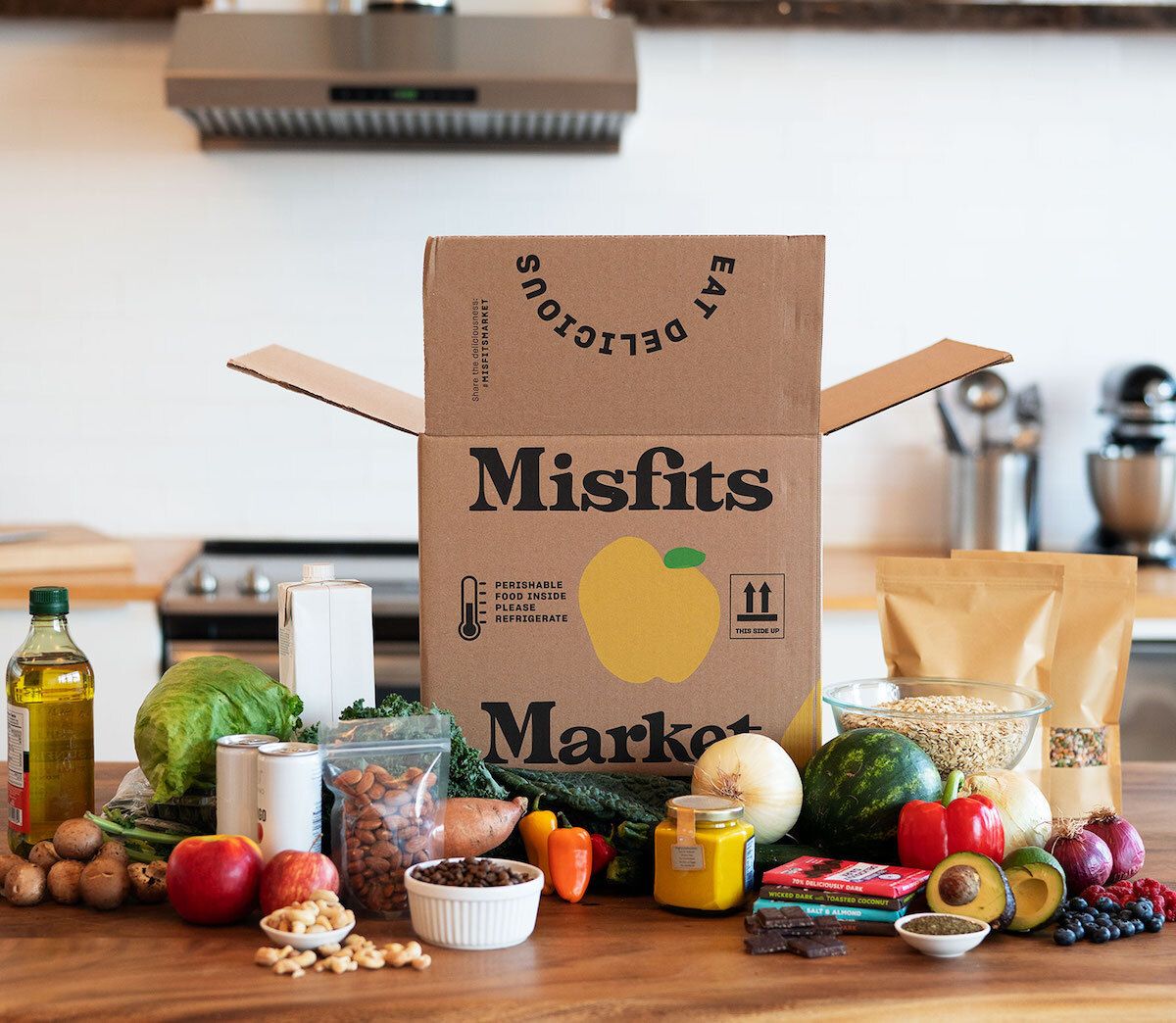
(Products with promise—here I endeavor to restore my faith that there really are for-profit brands out there intent on making the world a better place, beyond strategic accomplishments of rhetoric.)
I recently came across a brand that excites me: Misfits Market. We know that food waste is a huge problem, but to put a stat on it: 30% of the food in U.S. grocery stores is thrown away. (Although, the food we toss in our homes is even higher than that.)
Misfits Market rescues perfectly edible, high-quality food from small farms and food makers and delivers it on your doorstep for a more affordable price.
There’s something about the idea of “food rescuers” that I really love. Because while we’re obsessing over smoothies with sea moss and adaptogenic spice blends, our food industry is getting away with literal insanity.
I just got my first box this week, full of lemons that were labeled too big (what) and avocados with “scarring.” Most items I got were about 25% cheaper than the grocery store. Maybe it’s just my soft spot for outcasts but I’ll be ordering another one soon.
creative health
“The universe is only as large as our perception of it. When we cultivate our awareness, we are expanding the universe. This expands the scope, not just of the material at our disposal to create from, but of the life we get to live.”